
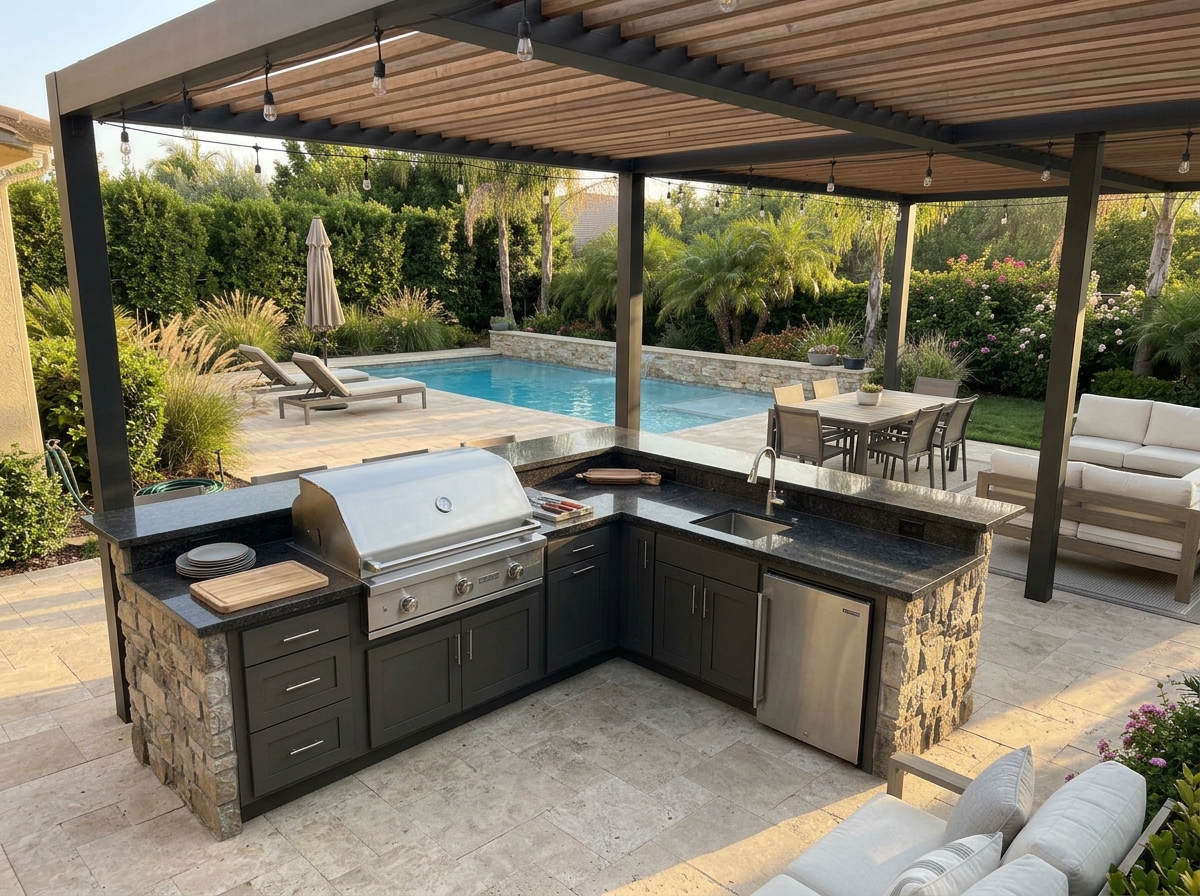
Outdoor Kitchen Cabinets in Brownsville, TX
Building a functional cooking space on a South Texas patio requires cabinetry materials engineered to survive extreme weather. Standard indoor wood and composite boards will quickly rot when exposed to rain and high humidity. True outdoor kitchen construction relies on structural metals and advanced polymers designed to handle constant UV exposure and moisture.
304 marine-grade stainless steel framing
Weatherproof marine-grade polymer/HDPE cabinetry
Designed for direct sun and torrential rain
Quick Facts: Serving Rancho Viejo, South Padre Island, Harlingen, Los Fresnos, Olmito, Port Isabel, San Benito, Cameron Park, and Brownsville. Call (956) 692-1552 or request a direct design estimate online.
Request an Outdoor Cabinet Quote
Complete the form below to receive your project estimate.
The Situation: Extreme Weather vs. Standard Materials
South Texas backyard patios endure a harsh, fluctuating climate. The intense Rio Grande Valley summer heat, combined with high coastal humidity and occasional Gulf breeze exposure, creates an aggressive environment for any permanent outdoor structure. Homeowners frequently attempt to build outdoor BBQ islands using standard treated lumber, indoor-grade plywood, or stucco over untreated steel studs.
These conventional construction methods quickly fail in exterior kitchens. Wood absorbs the ambient humidity, causing it to warp and expand. When torrential rain hits, the moisture trapped inside standard wood framing leads to rapid rot and mold growth. Furthermore, standard hardware and untreated fasteners quickly rust when exposed to the salty, humid coastal air. Drawers stop gliding, cabinet doors sag on corroded hinges, and masonry facades begin to crack as the internal structure swells and shifts.
Solving these environmental challenges requires abandoning traditional wood construction altogether. A permanent outdoor kitchen must be built using specialized exterior-grade materials. By utilizing non-porous marine-grade polymer (HDPE) that will not rot, warp, or split, alongside heavy-duty stainless steel structural framing, an outdoor kitchen can safely house heavy grills and stone countertops while surviving the local climate year-round.
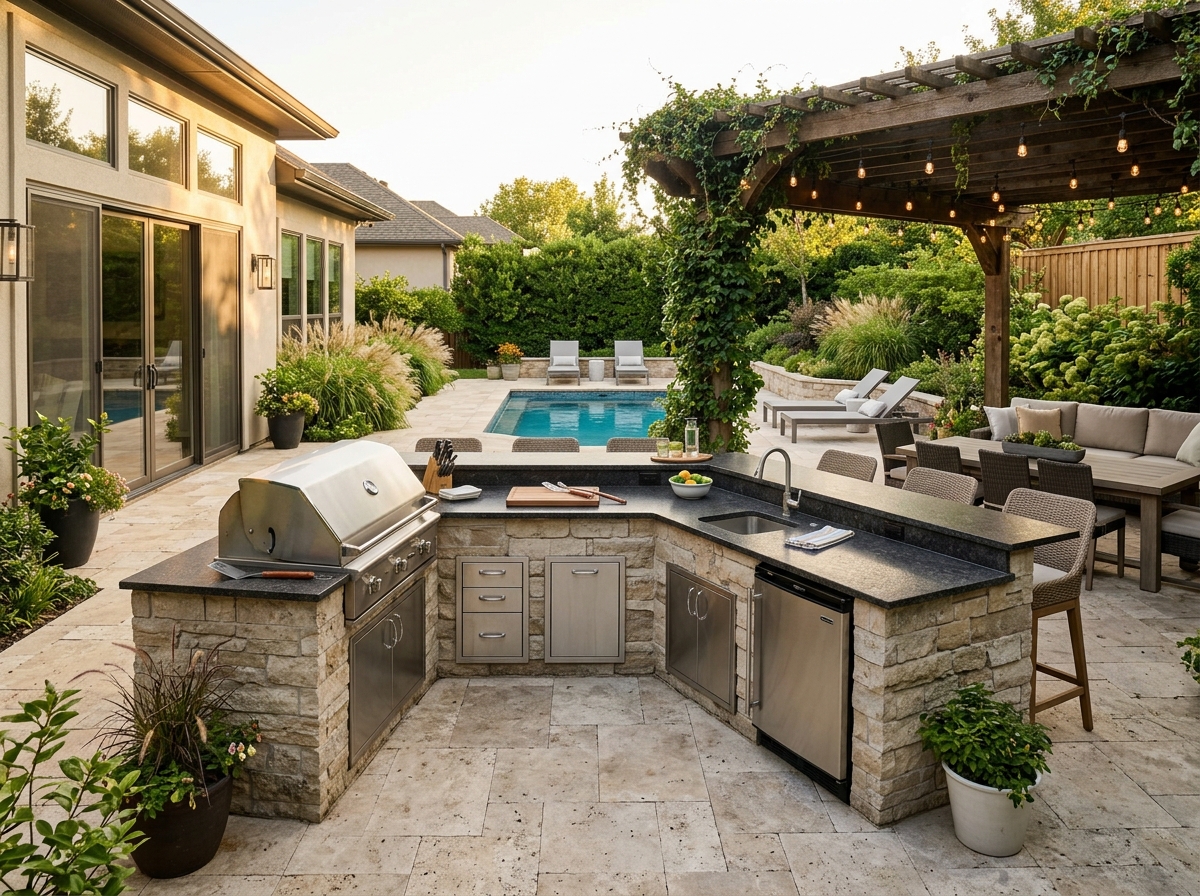
How a Cabinet Project Works
Step 1: Site Evaluation and Layout Planning
The process starts by evaluating the patio surface. Outdoor kitchens require a solid, level concrete or paver foundation. The layout is mapped to ensure proper clearances around high-heat appliances, like drop-in gas grills and pizza ovens. The design also incorporates essential utility runs, pinpointing exactly where electrical conduits, gas lines, and plumbing drains will enter the cabinet bases.
Step 2: Structural Framing Fabrication
Because standard wood framing deteriorates outdoors, the structural skeleton of the BBQ island is fabricated using weather-resistant materials. A professional typically uses 304 marine-grade stainless steel framing or extruded aluminum box tubing. This non-combustible metal framework safely supports the immense weight of thick granite or concrete countertops while providing a rigid, rust-resistant anchor for the exterior cabinet panels.
Step 3: Cabinet Assembly and Utility Integration
The cabinet boxes and drawer banks are assembled using high-density polyethylene (HDPE) or fabricated entirely from stainless steel. Cutouts are precisely mapped for the grill chassis, side burners, and outdoor refrigerators. Insulation jackets are installed around high-heat cooking appliances to prevent the metal framing and cabinetry surfaces from warping under intense thermal loads.
Step 4: Installation and Final Leveling
The assembled cabinet run is anchored to the patio. Outdoor surfaces are intentionally sloped for water drainage, so the cabinets must be meticulously leveled using stainless steel leveling legs or heavy-duty composite shims. Once perfectly plumb, the heavy countertops are set, and the appliance lines are connected and leak-tested before the final hardware is attached.
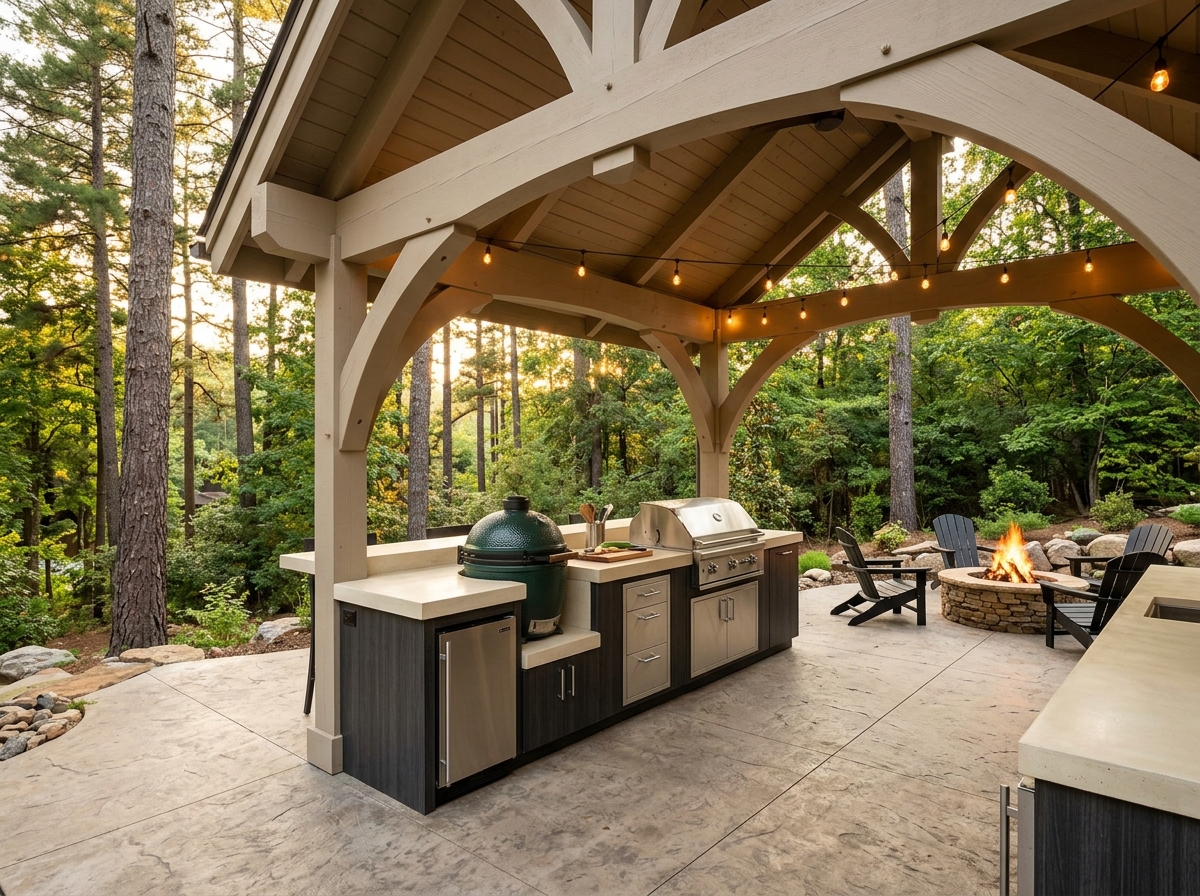
Ready to Build Your Outdoor Kitchen?
Call (956) 692-1552 to plan your outdoor patio kitchen or request a direct design estimate online.
What This Service Typically Covers
Outdoor BBQ Island Cabinets
The core of an exterior kitchen cabinetry layout is the grill base. These specific cabinets are engineered with non-combustible materials to safely house high-output gas or charcoal grills. They feature reinforced structural supports to handle the weight of heavy ceramic cookers and include integrated ventilation panels to prevent dangerous gas buildup inside the cabinet cavity.
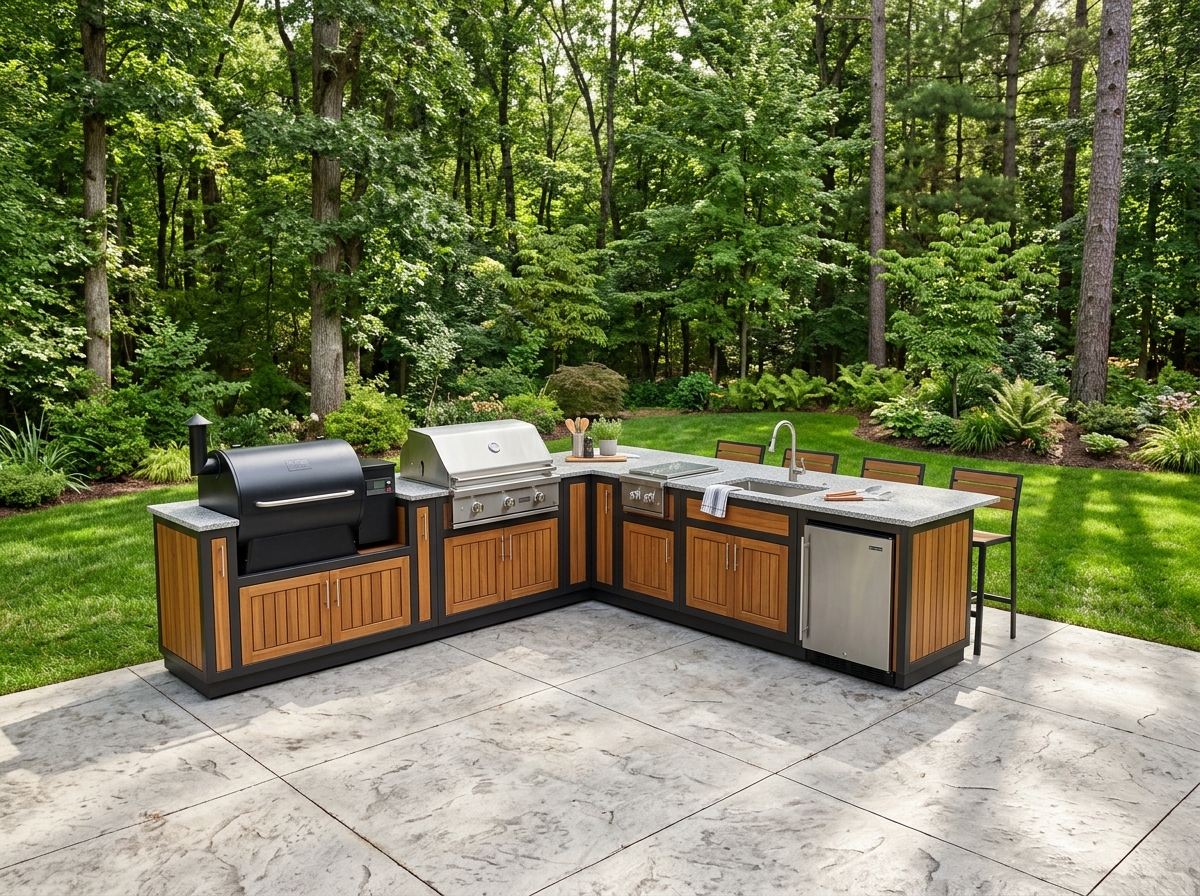
Weatherproof Storage and Drawers
Keeping grilling tools, charcoal, and patio accessories dry requires fully enclosed, weatherproof patio cabinets brownsville homeowners can rely on during storms. Storage units are built with tightly sealed doors and weather stripping to block out rain and pests. Heavy-duty, full-extension stainless steel drawer tracks are utilized to prevent rust and ensure smooth operation even after heavy rainfall.
Beverage Centers and Sink Bases
Outdoor kitchens frequently incorporate wet bars and refrigeration. Sink base cabinets are designed to easily route water supply lines and P-traps, while providing open internal space for under-sink water heaters or filtration. Surrounding cabinetry is precisely cut to accommodate slide-in outdoor-rated refrigerators, ice makers, and kegerators, ensuring proper airflow to the compressor coils.
Styles, Materials & Finish Options
Exterior kitchen cabinetry south texas residents install must prioritize UV resistance and thermal stability. The two primary choices are powder-coated stainless steel outdoor cabinets rgv professionals recommend for modern aesthetics, or marine-grade high-density polyethylene (HDPE). HDPE is a solid-color, high-impact polymer originally designed for the boating industry. It mimics the look of painted wood, offering traditional Shaker or louvered door styles, but will never peel, fade, or require painting. Hardware is strictly 304 or 316-grade stainless steel to combat coastal corrosion.
What to Look For in a Cabinet Maker
Material Verification
Ensure the written estimate specifies exactly what type of metal or polymer is being used. Reject proposals that rely on standard treated lumber or indoor-grade plywood for outdoor structures.
Hardware Grades
Verify that all drawer tracks, hinges, pulls, and leveling legs are explicitly listed as 304 or 316-grade stainless steel to prevent rapid rusting.
Appliance Insulation
Check that the contractor includes the installation of insulated grill jackets if combustible materials or polymers are located near the high-heat cooking zones.
Proper Ventilation
Ensure the design includes proper louvered venting panels in the grill base and any cabinet housing a propane tank, which is a critical safety requirement.
What Affects the Cost
The total cost of an outdoor kitchen is heavily influenced by the chosen materials and the size of the layout. Solid stainless steel cabinetry and marine-grade HDPE command a higher upfront material cost than traditional wood or cinderblock construction, but they eliminate the need for future rebuilding. A long, L-shaped island that requires custom framing to wrap around a corner will cost more in both labor and materials than a simple, straight six-foot grill station.
Site conditions and utility routing also dictate the final budget. If a patio needs to be poured, leveled, or structurally reinforced to handle the weight of stone countertops, preparation costs will increase. Running new natural gas lines, heavy electrical circuits for outdoor refrigeration, and plumbing drains across an existing yard requires trenching and specialized labor, adding significant expense before the cabinetry is even installed.
FAQ SECTION
Start Planning Your Outdoor Kitchen
Call (956) 692-1552 to plan your outdoor patio kitchen or request a direct design estimate online.